What Is Net 30? Payment Terms Explained for Freelancers
Net 30 is a payment term that gives clients 30 calendar days from the invoice date to submit payment in full. This guide explains how Net 30 works, its pros and cons for freelancers, and when shorter terms are the better choice.

Net 30 is a payment term that gives a client 30 calendar days from the invoice date to pay the full balance owed. Net 30 appears on invoices across freelance design, consulting, copywriting, and B2B (Business-to-Business) service contracts as one of the most widely recognized billing standards. Understanding when to use Net 30, and when to avoid it, directly determines whether a freelance business maintains healthy cash flow or waits weeks to cover operating costs.

What does Net 30 mean on an invoice?
Net 30 means the client must pay the full invoice amount within 30 calendar days of the invoice issue date. The word "net" refers to the total amount due after any discounts, and "30" refers to the number of days the client has to pay.
A freelancer who issues an invoice on April 7, 2026 with Net 30 terms sets a payment due date of May 7, 2026. The client owes the full amount by that date with no installments and no interest charged during the 30-day window. Most corporate accounts payable (AP) departments process supplier invoices on Net 30 cycles by default, which is why freelancers working with mid-sized and enterprise clients encounter this term frequently.
The "net" in Net 30 does not refer to a net income figure or deduction. Net simply means the total outstanding balance. Net 30 is interchangeable with "payment due within 30 days" on any invoice.
How does Net 30 work in practice?
Net 30 works by starting a 30-day payment clock the moment the seller issues the invoice. The client has until the 30th calendar day — including weekends and public holidays — to submit payment in full.
Three practical examples of how Net 30 operates across different freelance contexts:
- Graphic designer: Issues an invoice for $1,200 on March 1, 2026. Net 30 sets the due date at March 31, 2026. The client's accounts payable team processes the payment before month-end close.
- IT consultant: Completes a server migration on April 10, 2026 and invoices $3,600 the same day. Net 30 sets the due date at May 10, 2026. Payment arrives via bank transfer on May 8.
- Edge case — invoice dispute: A copywriter invoices $800 on February 1, 2026. The client disputes one line item on February 15 and requests a revised invoice on February 20. The revised invoice resets the Net 30 clock to March 22, 2026 — not the original February 28 due date.
Freelancers should always display both the payment term (Net 30) and the explicit due date on the invoice. Displaying only "Net 30" without the calculated due date creates ambiguity, particularly when clients disagree about which date the 30-day period starts from. Use the free invoice generator at CreateInvoices to set both fields automatically.
What is the difference between Net 30 and other payment terms?
Net 30 gives clients 30 days to pay. Shorter terms like Net 7 and Net 14 reduce the waiting period for freelancers, while longer terms like Net 60 and Net 90 are standard in manufacturing, wholesale, and large enterprise contracts.
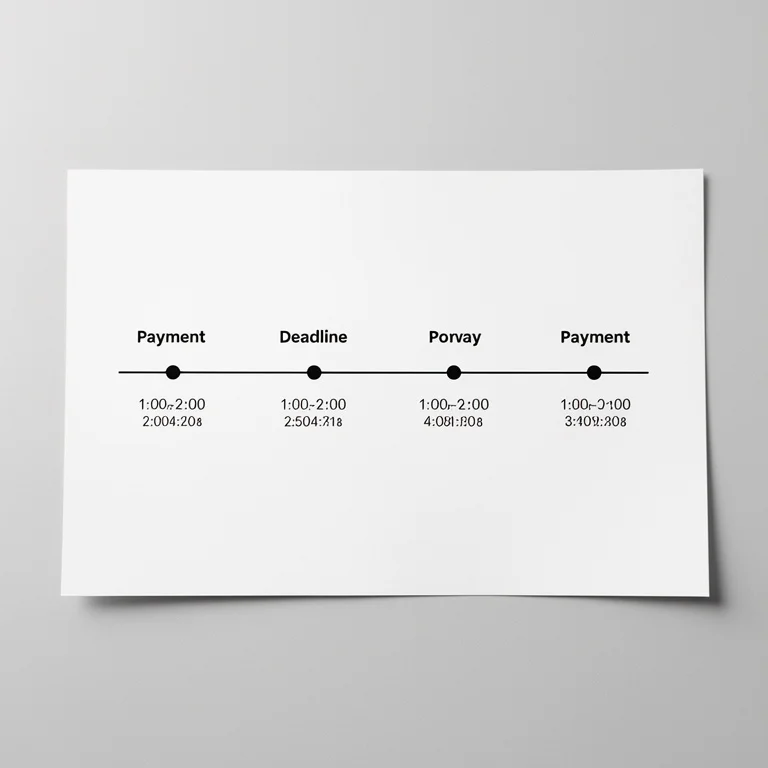
The table below compares the most common net payment terms across business types:
| Term | Days to Pay | Best Used For |
|---|---|---|
| Due on Receipt | 1 business day | New clients, small projects, digital deliverables |
| Net 7 | 7 days | Freelancers, short-turnaround projects under $500 |
| Net 14 | 14 days | Freelance creative work, recurring clients |
| Net 30 | 30 days | B2B services, established clients, corporate contracts |
| Net 60 | 60 days | Enterprise clients, government contracts |
| Net 90 | 90 days | Large manufacturing and wholesale supply chains |
A 2026 survey by InvoiceQuickly found that freelancers in creative services increasingly default to Net 14 instead of Net 30, citing faster cash recovery without meaningfully deterring clients. Net 30 remains the standard expectation for corporate buyers with formal AP departments at companies such as Bloomberg, Marriott, and similar enterprise organizations.
What is 2/10 Net 30 and how does it work?
2/10 Net 30 is an early payment discount term that gives the client a 2% discount on the invoice total if the client pays within 10 days, with the full amount remaining due by day 30 if the client does not take the discount.
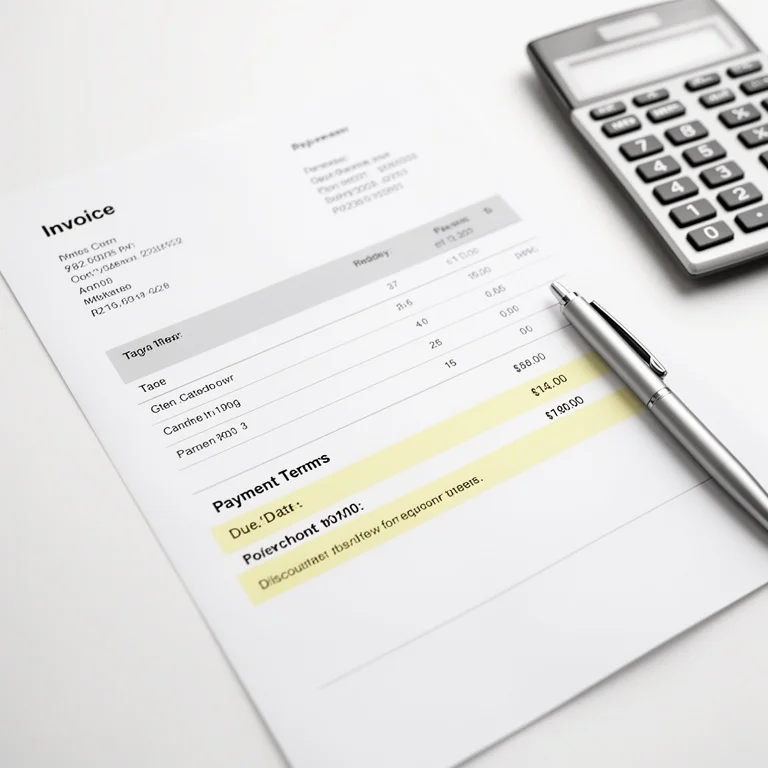
A worked example of 2/10 Net 30 on a $2,000 invoice:
- Option A: Client pays $1,960 (a $40 saving) within 10 days of the invoice date
- Option B: Client pays the full $2,000 by day 30
The 2% discount on a 20-day acceleration equates to a 36.5% annualized return for the client, making it a financially attractive offer for cash-rich buyers. Freelancers using 2/10 Net 30 recover payment 20 days faster on average compared to standard Net 30 invoices, according to GoCardless platform data. To use this term on an invoice, write "2/10 Net 30" in the payment terms field and add a note: "A 2% discount applies to the invoice total if payment is received within 10 days of the invoice date."
Should freelancers use Net 30?
Freelancers with limited cash reserves should avoid Net 30 for new clients and use Net 7, Net 14, or Due on Receipt instead. Net 30 is appropriate for established clients with reliable payment histories, large project values above $5,000, and corporate buyers with fixed AP cycles.
Three criteria that determine whether Net 30 is appropriate for a freelance engagement:
- Client type: Startups and small businesses typically pay within a few days of receiving an invoice. Mid-sized businesses operate on Net 15 or Net 30. Enterprise clients and government agencies often require Net 30 as a non-negotiable condition.
- Project size: A $300 logo project does not justify Net 30 terms. A $12,000 brand strategy engagement with a corporate client warrants it.
- Cash buffer: A freelancer with 60 or more days of operating expenses saved can absorb a Net 30 payment cycle. A freelancer covering monthly bills from invoice payments cannot.
Xero data from 2023 shows that invoices issued with Net 30 terms take an average of 37 days to be paid — 7 days beyond the stated deadline. A freelancer billing $8,000 per month on Net 30 terms carries approximately $12,000 in outstanding receivables at any given time, effectively lending that amount to clients interest-free. For context on building invoices with clear payment terms, see the complete guide to writing a professional invoice on CreateInvoices.
How should a freelancer write Net 30 on an invoice?
Write "Net 30" in the payment terms field of the invoice, then state the exact due date in a separate field. Include the accepted payment methods and any late fee policy directly below the payment terms.
A correctly written payment terms section on a Net 30 invoice:
Payment Terms: Net 30
Invoice Date:  April 7, 2026
Due Date:      May 7, 2026

Accepted Methods: Bank transfer, PayPal, Stripe
Late Fee: 1.5% per month on balances unpaid after May 7, 2026

Bank Details:
Account Name: [Freelancer Business Name]
Account Number: XXXXXXXX
Sort Code / Routing Number: XX-XX-XX
Writing a late fee clause on Net 30 invoices protects against slow payers. A 1.5% monthly late fee on a $3,000 invoice adds $45 for every month the invoice remains unpaid beyond the due date. State the late fee policy in the contract before starting work, then repeat it on the invoice to make enforcement enforceable.
What happens if a client does not pay within Net 30?
When a Net 30 invoice passes the due date without payment, the freelancer should send a payment reminder on day 31, a formal overdue notice on day 7 after the due date, and a final demand letter by day 14, before escalating to collections or small claims court.
A three-stage follow-up sequence for unpaid Net 30 invoices:
- Day 31 (1 day overdue): Send a polite email reminder referencing the invoice number, the original due date, and the outstanding balance. Attach the original invoice PDF.
- Day 37 (7 days overdue): Send a formal overdue notice stating that the late fee clause is now active and specifying the new total including the accrued late fee.
- Day 44 (14 days overdue): Send a final demand letter stating that the account will be referred to a debt collection agency or small claims court if payment is not received within 7 business days.
Freelancers who state the late fee policy upfront in both the contract and the invoice collect overdue invoices an average of 14 days faster than those who apply fees without prior written notice, according to data from the Freelancers Union 2024 report.
Ready to create an invoice with clear Net 30 terms, an automatic due date, and a late fee clause already formatted? Use the CreateInvoices free invoice generator to build and download a professional PDF invoice in under 2 minutes.